

Many New York buildings run elevators that are decades old. Some of them are in very good shape. Others are costing more each year in repairs, downtime, and tenant complaints. For property managers and boards, the hard part is telling which is which, and putting a decision in front of the board that holds up.
Why age alone is not the answer
An elevator's age tells you when it was installed, not how it is performing. A well-maintained 30-year-old system with available parts can be more reliable than a neglected 15-year-old one. Commonly cited service-life figures, such as 20 to 25 years for a controller, are general rules of thumb rather than deadlines.
A better approach is to look at what the equipment is actually doing and what it will cost to keep it doing that.
Five signs repairs are outpacing value
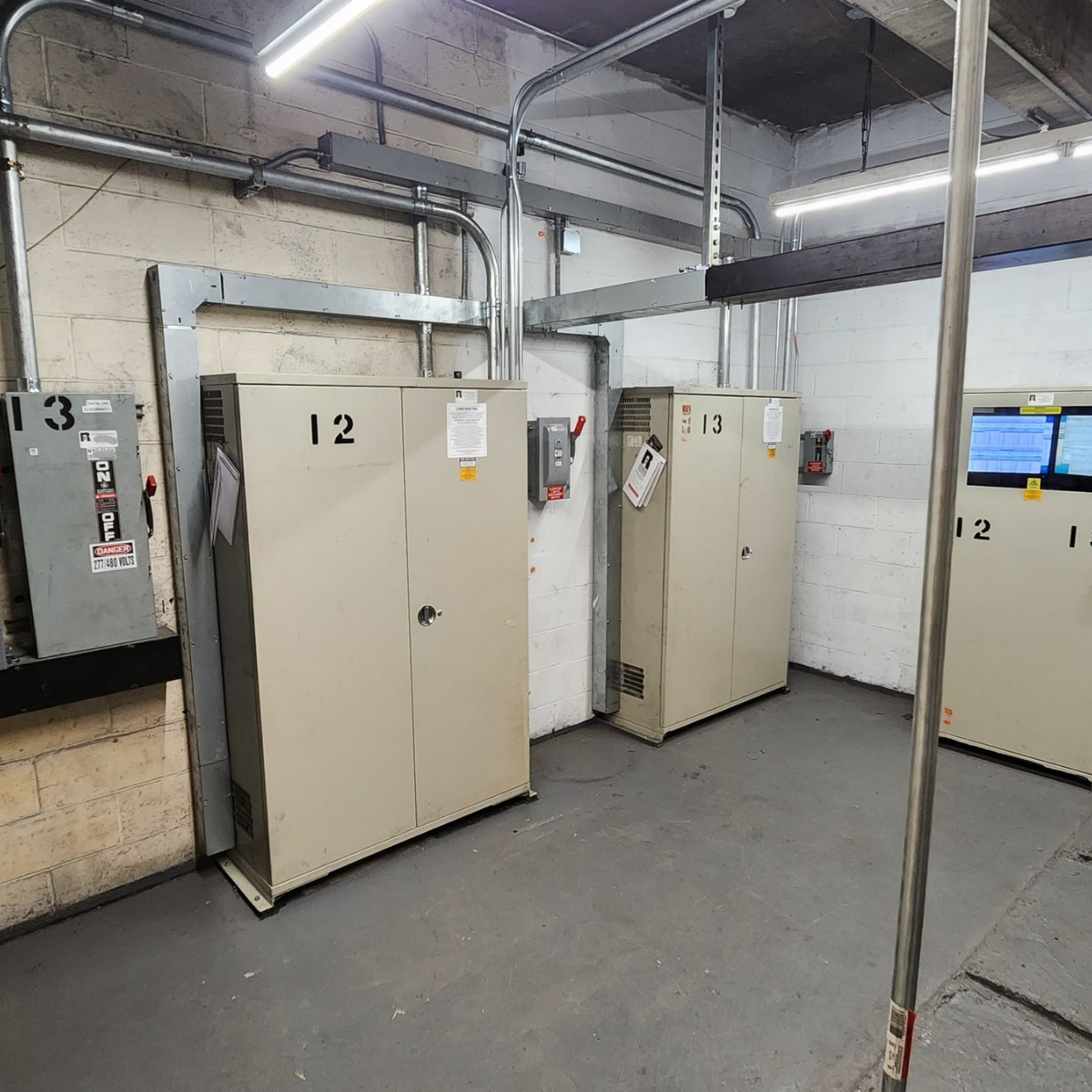
1. Parts availability. When the manufacturer stops supporting a controller, drive, or door operator, every repair gets slower. Parts may have to be rebuilt, sourced, used, or fabricated. A one-day repair can stretch into a long outage while a part is found.
2. Repeat callbacks for the same problem. One breakdown is normal. The same fault three or four times in a year usually means a component has worn past the point where adjustment fixes it.
3. Declining ride quality and leveling. A car that stops above or below the floor, jerks on starts and stops, or rides rougher than it used to is often showing wear in the controller, drive, or (on hydraulic cars) the valve.
4. Older control technology. Relay logic controllers can still run reliably, but they are harder to troubleshoot, and fewer mechanics work on them every day. Microprocessor controllers give better diagnostics and can improve dispatching in buildings with more than one car.
5. Energy and heat. Some older traction systems use motor-generator sets, which run continuously and produce a lot of heat. Modern drives can use less energy, and some can return energy to the building when the car is braking. Actual savings depend on the building and equipment, so ask for an estimate specific to your cars rather than a general percentage.
Signs better maintenance may be enough
Breakdowns are occasional and unrelated to one another.
Parts are still available from the manufacturer or common suppliers.
Ride quality and leveling are steady.
Your maintenance records show issues being resolved rather than recurring.
If that describes your building, a closer look at the maintenance program may be the more cost-effective step.
What modernization usually includes:
The scope depends on the equipment. On a traction elevator, a modernization often covers the controller, the drive, door operators and door equipment, and fixtures such as hall and car buttons. The hoist machine is sometimes kept and sometimes replaced. On a hydraulic elevator, it often covers the controller, the pump unit and valve, and door equipment, and may include the cylinder.
Modernization can also bring parts of the elevator up to the code in effect at the time of the work. Which upgrades are triggered depends on what is being altered.
Phasing the work
Modernization does not have to happen all at once. Many buildings start with the components causing the most trouble, often the controller and door equipment, and plan the remaining work over the following years. In a building with more than one car, cars are usually modernized one at a time so at least one stays in service.
What to bring to the board
Boards decide faster when they have the facts in one place:
A condition assessment of each car from your elevator company.
A repair and callback history for the last two to three years.
A statement on parts availability for the controller, drive, and door equipment.
A scope and cost estimate, with a phased option if one makes sense.
An expected out-of-service period per car and a tenant communication plan.
The permit and acceptance testing steps and the timeline they add.
Permits and acceptance tests
Modernization work in New York City requires a DOB permit, and the finished work must pass an acceptance test before the car returns to service. Through December 31, 2026, the DOB's Third-Party Elevator Inspection Pilot Program allows approved elevator agencies to perform these acceptance tests, witnessed by a separate agency that is not affiliated with the work. The DOB can end or amend the program, so if your project will finish in 2027, confirm with your elevator company how acceptance testing will be scheduled.
If you are weighing repair against modernization, we can assess your equipment and give you a plain answer either way. Call us at 718-720-3200.
Related reading: the January 1, 2027 brake requirement for certain traction elevators, at richmondelevator.com/blog/nyc-elevator-violations
Frequently asked questions
How long does an elevator modernization take?
It depends on the scope, the equipment, and permitting. Each car is typically out of service for several weeks. Ask your elevator company for a schedule specific to your building.
Can we modernize one car at a time?
In most multi-car buildings, yes, and it is the usual approach because it keeps service available.
Is a modernization the same as a new elevator?
No. Modernization replaces major components while keeping parts of the existing system, such as the rails, the car frame, and often the machine. A full replacement is a larger project.
Will modernization reduce our repair costs?
It usually reduces callbacks tied to the replaced components, because the parts are new and supported. It does not eliminate the need for routine maintenance.
Staying informed
For ongoing updates and direct support, visit the Richmond Elevator Blog:
https://www.richmondelevator.com/blog
For the most accurate and official information, visit:
Serving Staten Island and the five boroughs for over 30 years.
Licensed under the New York City Department of Buildings